Training Brand Voice AIs: The Role of Custom Studio Audio Datasets in Sonic Branding
A brand voice is more than a recognizable speaker. It is a combination of tone, pacing, pronunciation, emotion, personality, and sound quality that helps an audience recognize who is speaking before they even see a logo.
As conversational AI, voice interfaces, and intelligent assistants become part of customer experiences, brands need audio that reflects those same qualities consistently. That starts with carefully planned, professionally recorded voice data.
At Buttons Sound, we help organizations capture custom audio datasets for sonic branding applications through professional voice casting, studio recording, creative direction, editing, and audio preparation. Our role is focused on producing high-quality source material, not developing AI models or creating unauthorized voice clones.
Building Distinctive AI Brand Personas with High-Fidelity Voice Datasets
Generic recordings may provide speech data, but they do not necessarily capture the personality a brand wants customers to hear. A custom dataset gives teams greater control over the vocal characteristics that support their sonic identity.
Translating Brand Traits into Acoustic Guidelines and Phonetic Variations
Words such as confident, approachable, sophisticated, energetic, or reassuring can mean very different things when spoken.
Before recording begins, those brand traits should be translated into practical vocal direction. That may include speaking pace, articulation, emphasis, pitch, pronunciation, pauses, and regional or linguistic considerations.
Recording a useful dataset may also require diverse phonetic combinations, sentence structures, names, numbers, commands, questions, and conversational phrases. Planning these variations in advance helps create source recordings that better reflect how people actually communicate.
Capturing Emotional Range and Tonal Cadence for Interactive Voice AI
A brand voice should not sound like someone mechanically reading thousands of disconnected prompts. Even highly structured recording sessions benefit from human direction.
Professional voice talent can deliver subtle differences in warmth, urgency, curiosity, confidence, excitement, and neutrality while maintaining a recognizable vocal identity.
Buttons Sound can incorporate voice casting for AI training projects into the production process, helping brands select talent whose natural delivery aligns with their desired acoustic persona. Session direction then helps preserve that personality across a large volume of material.
The Critical Need for Consistent Microphone Placement and Zero Echo
Voice data also needs technical consistency.
Changes in microphone distance, room acoustics, background noise, reverberation, gain, or recording equipment can introduce variations unrelated to the speaker’s actual performance. Those inconsistencies become part of the recorded data.
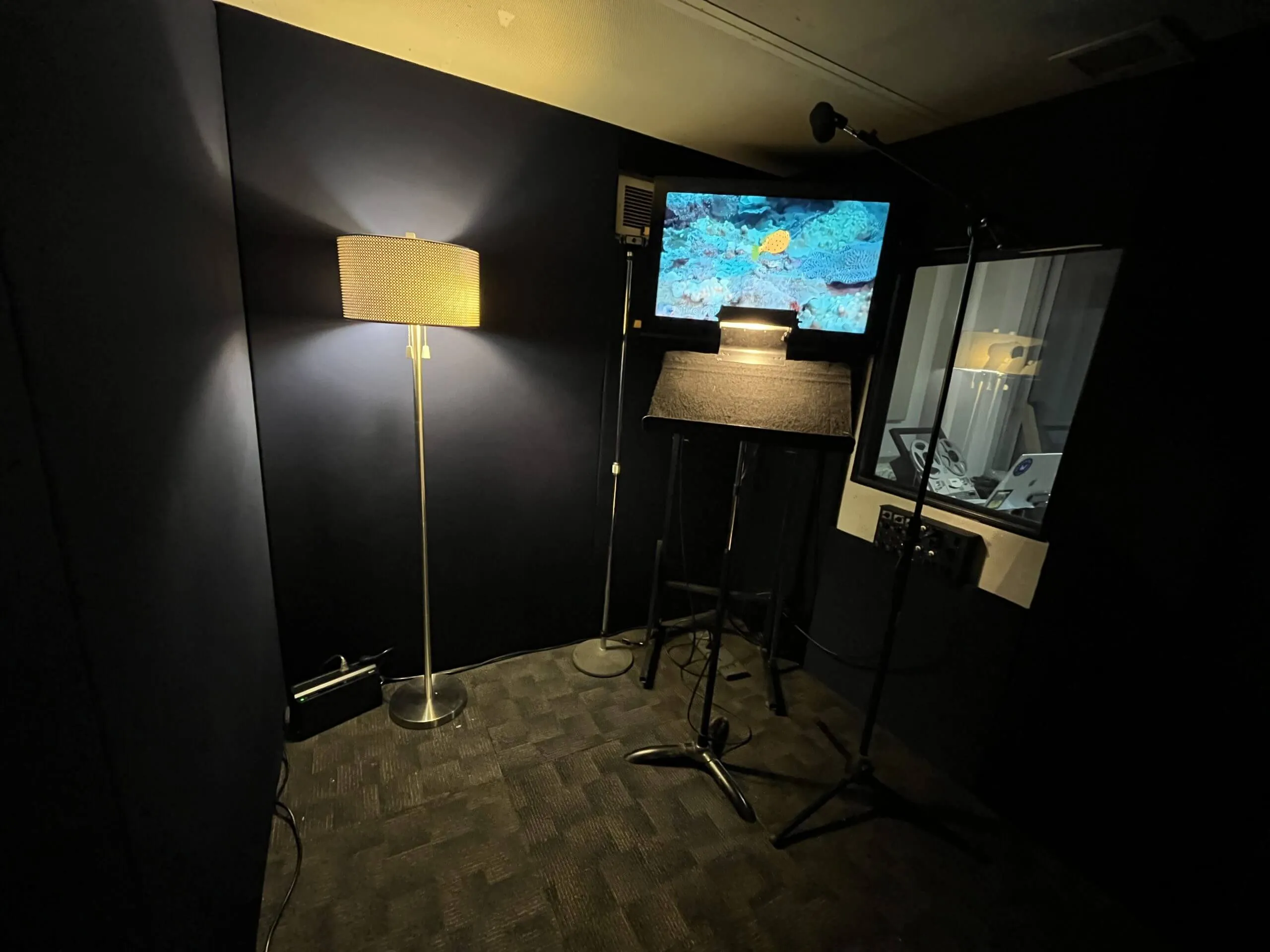
Professional studio environments help control those variables. Consistent microphone placement, acoustically isolated spaces, experienced engineering, and repeatable recording workflows produce cleaner audio for downstream analysis, transcription, voice
Engineering Spectrogram-Ready Audio for Synthetic Brand Assistants
Machine-learning systems process audio as digital information rather than hearing it as people do. Depending on the application, recordings may be converted into numerical features and visual frequency representations such as spectrograms.
Because those representations contain information about frequency, timing, intensity, and vocal characteristics, recording quality matters from the beginning.
Eliminating Spectral Artifacts That Distort AI Voice Synthesis
Room reflections, clipping, background sounds, electrical noise, inconsistent gain, and microphone handling can alter the acoustic information contained within a recording.
Trying to repair those problems after a session is not always ideal. Starting with controlled, studio-quality source recordings helps preserve cleaner acoustic information and reduces avoidable inconsistencies within AI audio datasets.
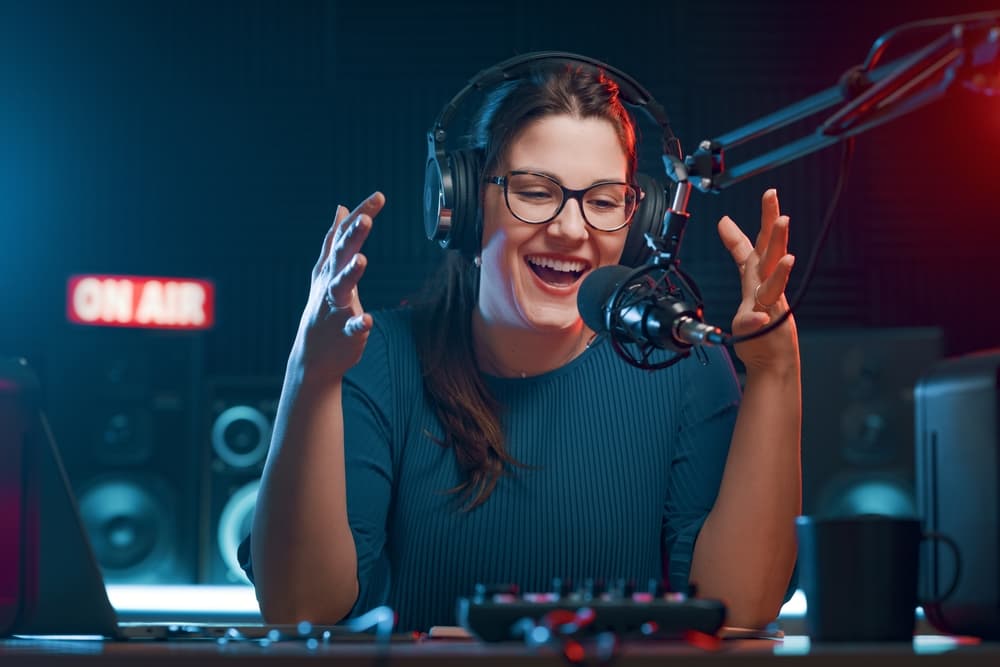
Buttons Sound approaches these projects as professional recording productions, combining appropriate microphones, controlled studio environments, engineering oversight, and careful quality checks.
Developing Tonal Consistency Across Brand Touchpoints and Micro-Interactions
A branded voice may eventually appear across many environments: customer service interfaces, mobile experiences, smart devices, interactive installations, branded content, or other voice-enabled applications.
Although the wording may change, the brand personality should remain recognizable.
Developing consistent source recordings gives creative and technical teams a stronger foundation for maintaining vocal character across short prompts, longer explanations, questions, confirmations, and other micro-interactions.
Ensuring Ethical Consent and Vocal Ownership in AI Persona Building
Voice ownership is an increasingly important consideration in AI-related production.
Buttons Sound does not provide unauthorized voice cloning or create synthetic models designed to imitate individual performers. Our focus is professional, consent-based audio recording.
Clients should establish how recordings will be used, what rights are required, how long the material may be retained, and whether future applications fall within the agreed scope. Voice talent should understand the intended project before recording begins.
Clear expectations protect performers while giving brands a more responsible foundation for developing voice-driven experiences.
Combining Decades of Sonic DNA Design with Precision AI Data Collection
Successful AI voice projects require more than technically clean files. The recordings also need to fit the brand’s broader sonic identity.
Aligning Custom Speech Datasets with Broader Sonic Ecosystems
Voice should work alongside music, sonic logos, interface sounds, sound design, and other recognizable audio elements.
Buttons Sound’s experience in sonic branding allows dataset recording to be approached as part of a larger creative system rather than an isolated technical task. Vocal qualities can be developed with the same brand principles guiding other audio touchpoints.
Protecting Brand Integrity Across Interactive Audio UX and Smart Devices
As brands expand into voice-enabled environments, inconsistency can weaken recognition.
Establishing clear performance guidelines, recording specifications, file organization, naming conventions, transcription requirements, and quality standards before production helps teams build a more reliable library of branded audio assets.
Early planning is especially valuable for large projects involving multiple speakers, languages, accents, or recording sessions.
Why Buttons Sound Inc. Is the Premier Choice for Sonic Branding AI Audio Datasets
Buttons Sound brings professional recording, engineering, sonic branding, creative direction, and voice casting into one collaborative production workflow.
From our Midtown Manhattan studio, we can help organizations plan and record custom brand voice datasets while also supporting remote, national, and international projects.
If your team is preparing a voice recognition, conversational AI, transcription, or branded audio initiative, contact Buttons Sound to discuss the voice talent, recording specifications, creative direction, and audio deliverables your project will require.